 PosellaPosella
A bicycle is a strong prop but easy to angle badly, which makes the frame look distorted. This set specifies keeping the bike slightly diagonal to the camera rather than parallel, and where to rest your hands so your shoulders do not hunch.
A bicycle photographs beautifully but is easy to angle badly. Left parallel to the camera, the frame becomes one long horizontal line across the picture and looks completely flat. Turn it 30 to 45 degrees with the front wheel angled toward the lens and it gains depth immediately.
Walking the bike usually looks more natural than sitting on it and posing. When walking, hold the bars with one hand and let the other fall naturally or rest on the saddle — gripping both bars lifts your shoulders and stiffens your upper body.
If you do sit on the saddle, do not try to actually balance: put one foot down and let your body lean slightly that way. Trying to sit upright on a stationary bike makes your whole body tense, and it shows. A plain vintage bike tends to photograph better than a detailed sports bike, simply because there is less competing with you.
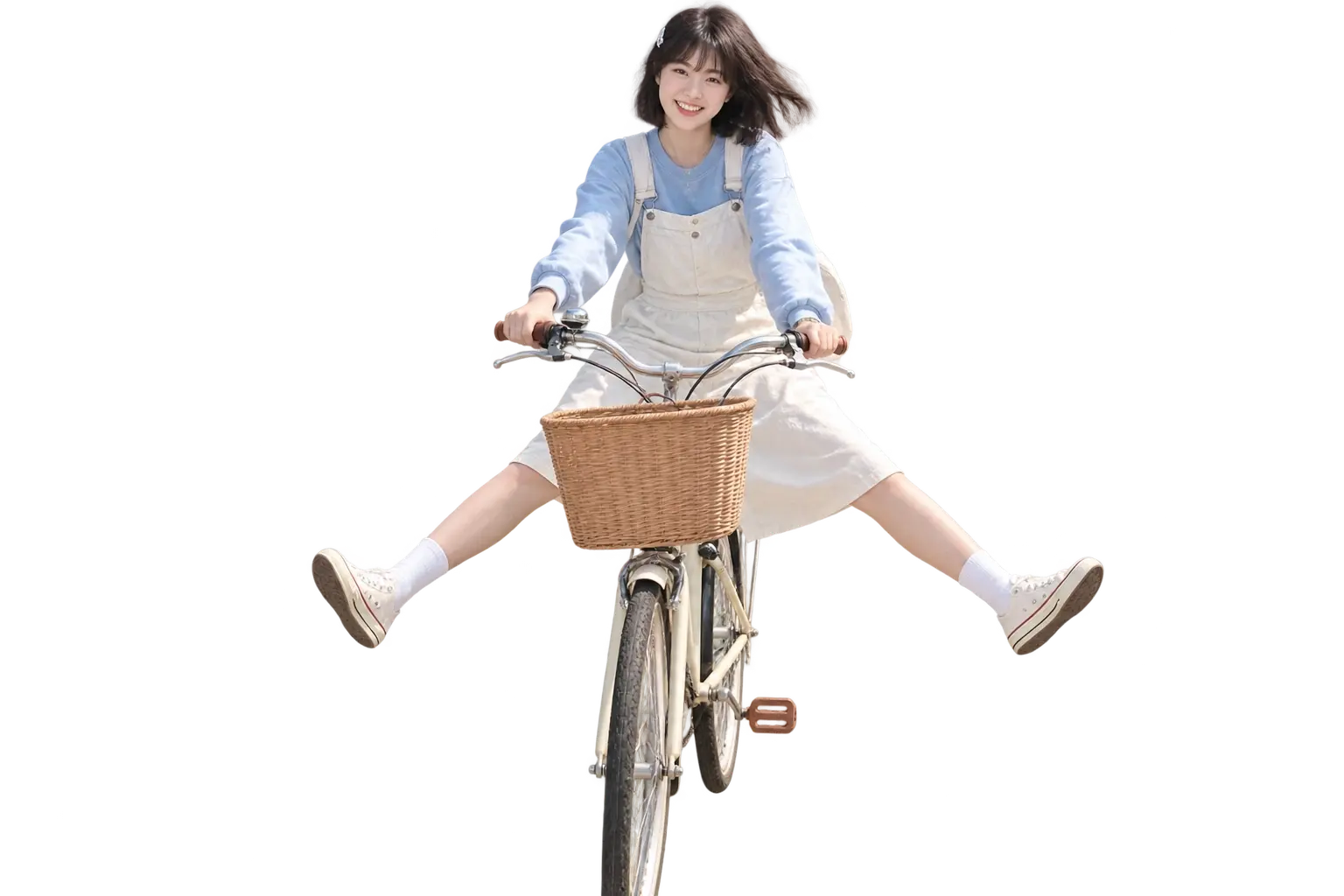
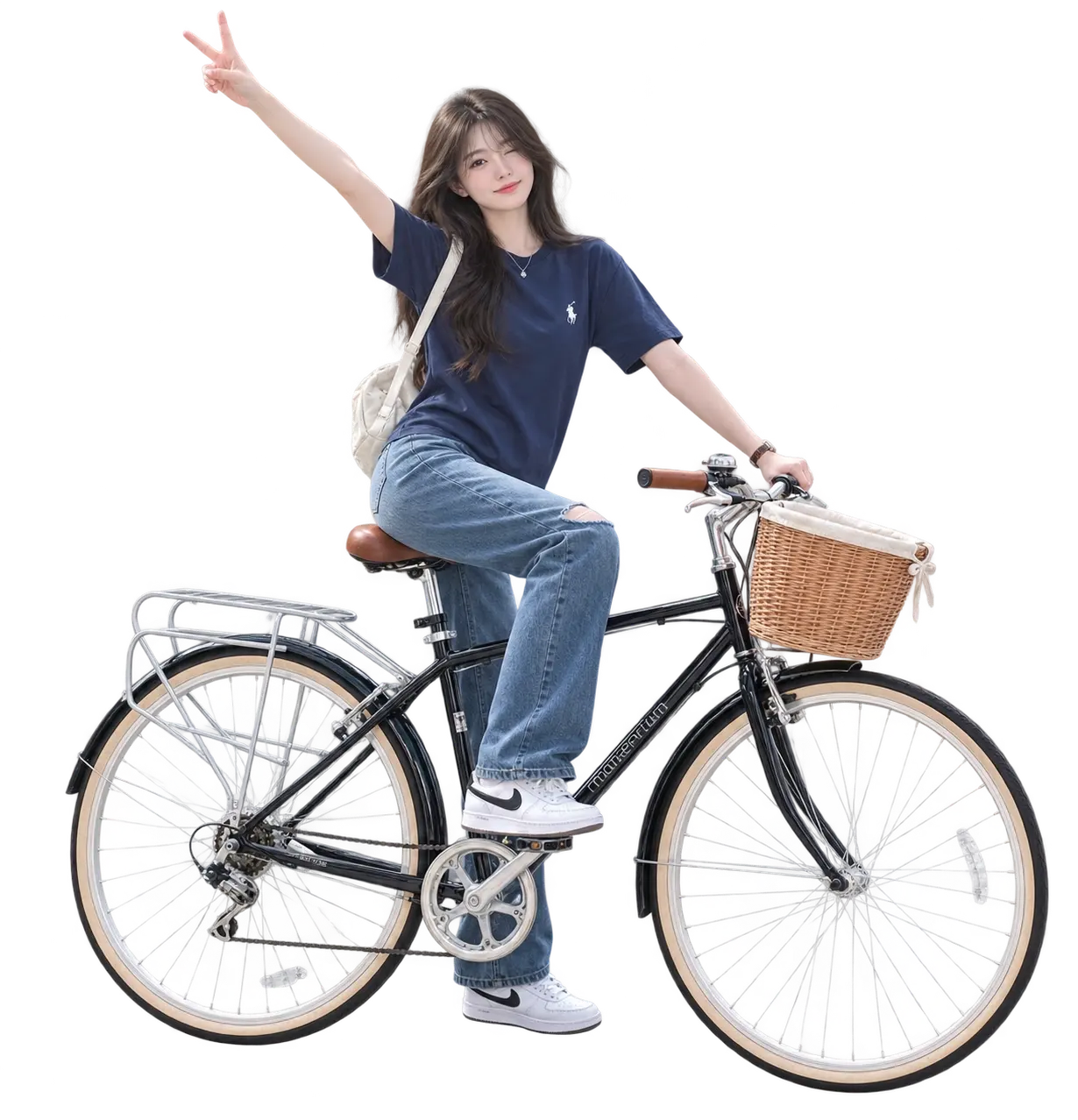

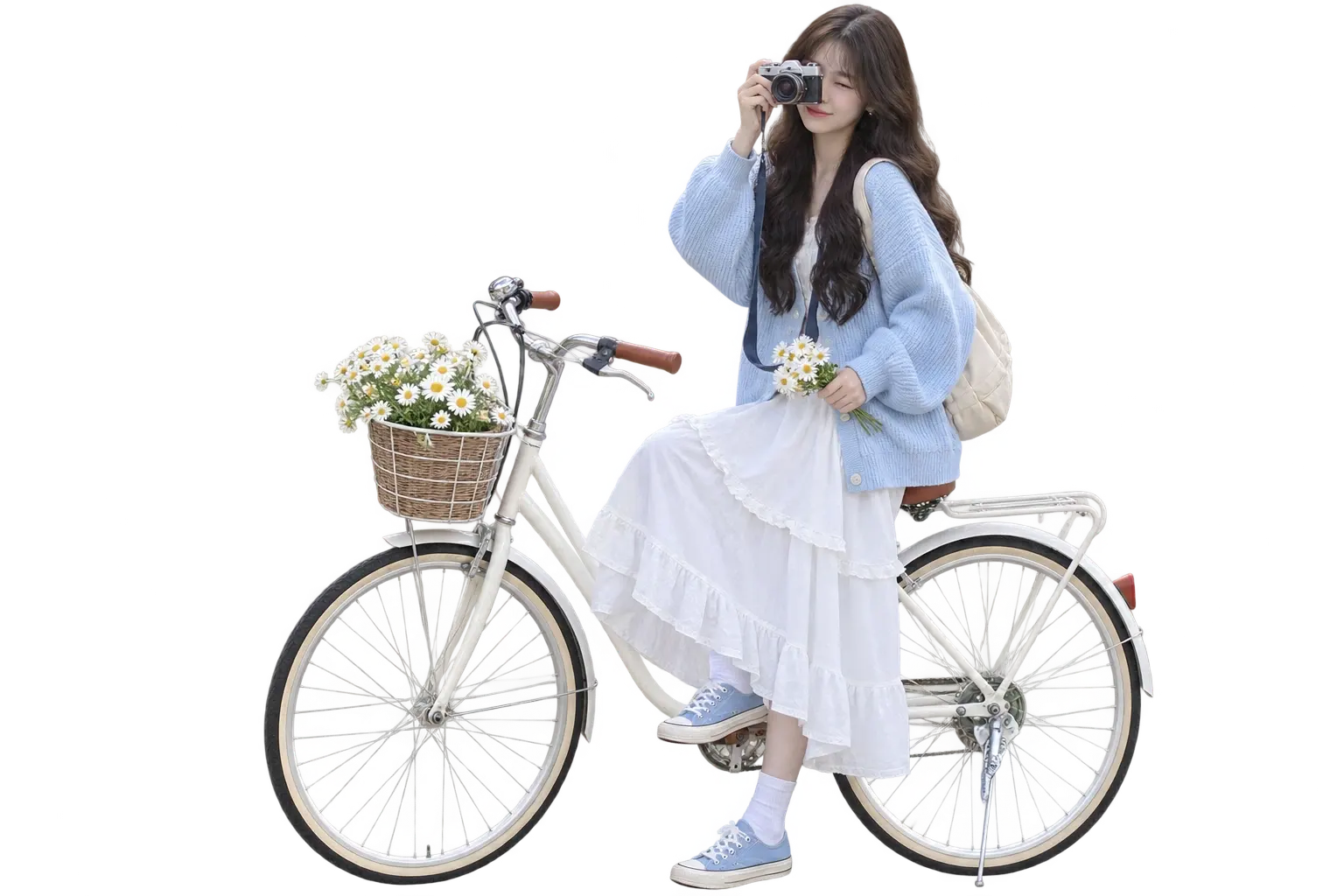
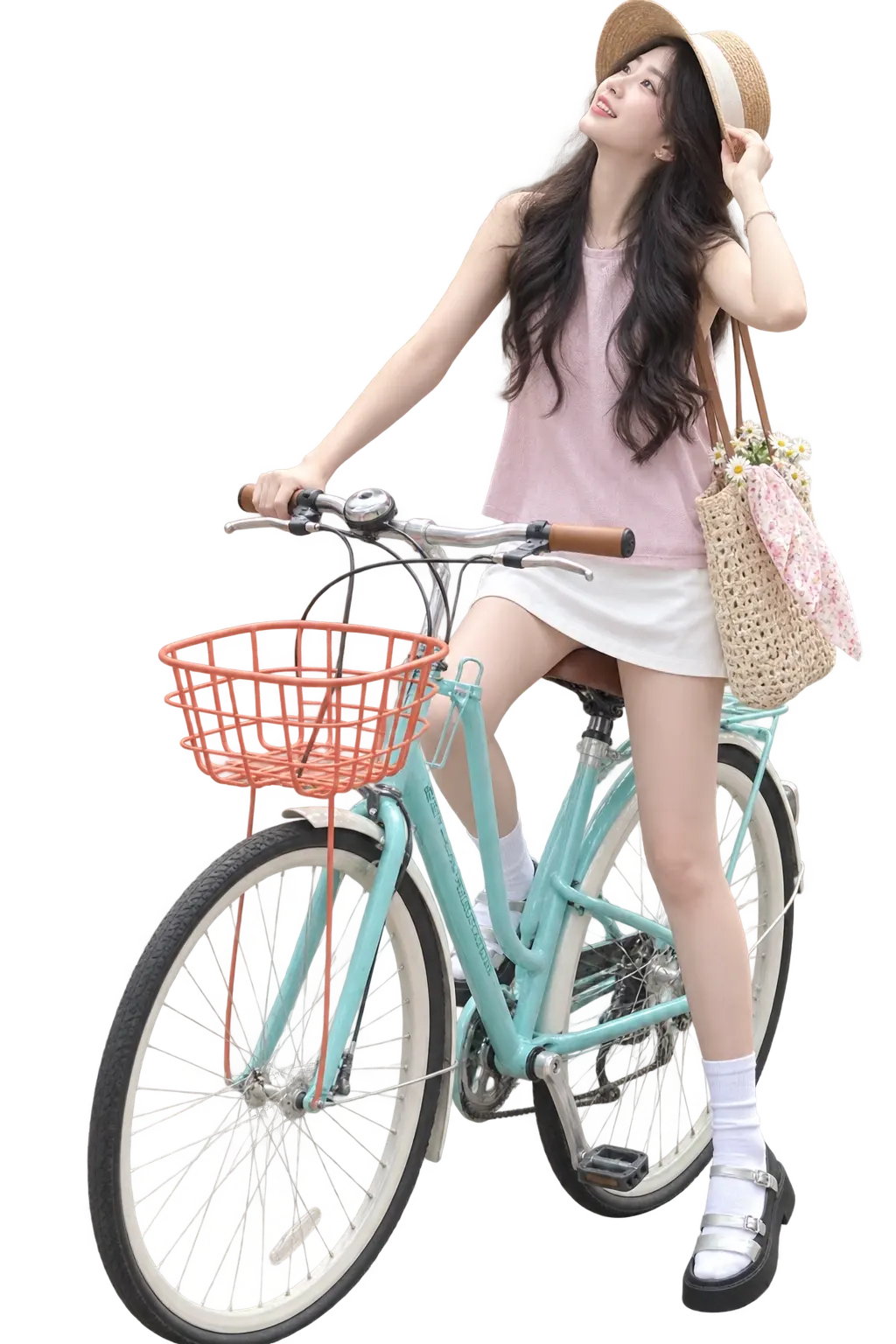
Showing 5 reference poses. Get the Posella app to see every pose in this setting and line up on them as you shoot.
Get it on Google PlayPlacing a bicycle flat and parallel to the camera is the default arrangement and the weakest one. At that angle it becomes a long horizontal bar across the frame, the two wheels read as identical circles, and the person behind it is cut in half.
Turn the bike about thirty degrees to the lens and the front wheel becomes larger than the rear, the frame forms a diagonal leading into the picture, and there is depth instead of a flat shape. Stand toward the rear wheel and slightly back, letting the bike lead the eye from the bottom corner up to you.
Standing next to a bike on its kickstand gives you nothing to do, and the hands fall straight into the familiar problem of having no purpose. Walking the bike solves it immediately: the hands have a natural place on the bars, the body leans slightly forward, and there is real movement.
If you sit on it, do not sit upright on the saddle with both feet flat on the ground — that reads as waiting at a red light. Either put one foot on a raised pedal with the other down, or shoot while actually riding with the photographer moving alongside. A foot on a pedal always looks more correct than a foot on the road.
Bicycle wheels are two large circles, and the eye is drawn to circles more strongly than to any other shape. That can help or hurt depending on where you put them. A wheel sitting directly behind someone’s head creates an odd halo and pulls attention off the face.
Quick check before the shutter: no wheel, lamp post or other circle overlapping a head. Half a step sideways is enough. Conversely, spokes and rims make excellent close detail, worth a separate frame with the rider blurred behind them.
Turn on your camera and line yourself up with a reference pose. The web version is preview only — shooting and saving live in the app.
Drag to move the pose, pinch (or scroll) to resize.
Pose to try
Taking and saving photos is app-only.
