 PosellaPosella
On a boat there is nowhere to step back to, so camera angles are limited. This set picks poses that work in confined space: leaning on the rail, sitting at the bow, and standing at an angle along the deck to create depth.
On a boat the real constraint is that there is nowhere to step back to. The photographer cannot move further away, so almost every frame is a close or half-body shot. Accept that and use it: shooting close with water and horizon behind you usually gives a cleaner picture than trying to cram the whole boat in.
The rail is your best friend here. It gives your hands somewhere to go, keeps you steady when the boat moves, and draws a horizontal line to compose against. Leaning on it looking out to sea, or turning your back to it and bracing with both hands, are easy and reliably good.
Watch the horizon. A boat is never still, so tilted frames are very easy to end up with, and a crooked horizon ruins the feel of an otherwise good photo. Turn on your phone's grid if it has one. Water also reflects strongly, so light bounces up onto your face from below — which is actually helpful, as it softens the shadow under your chin.
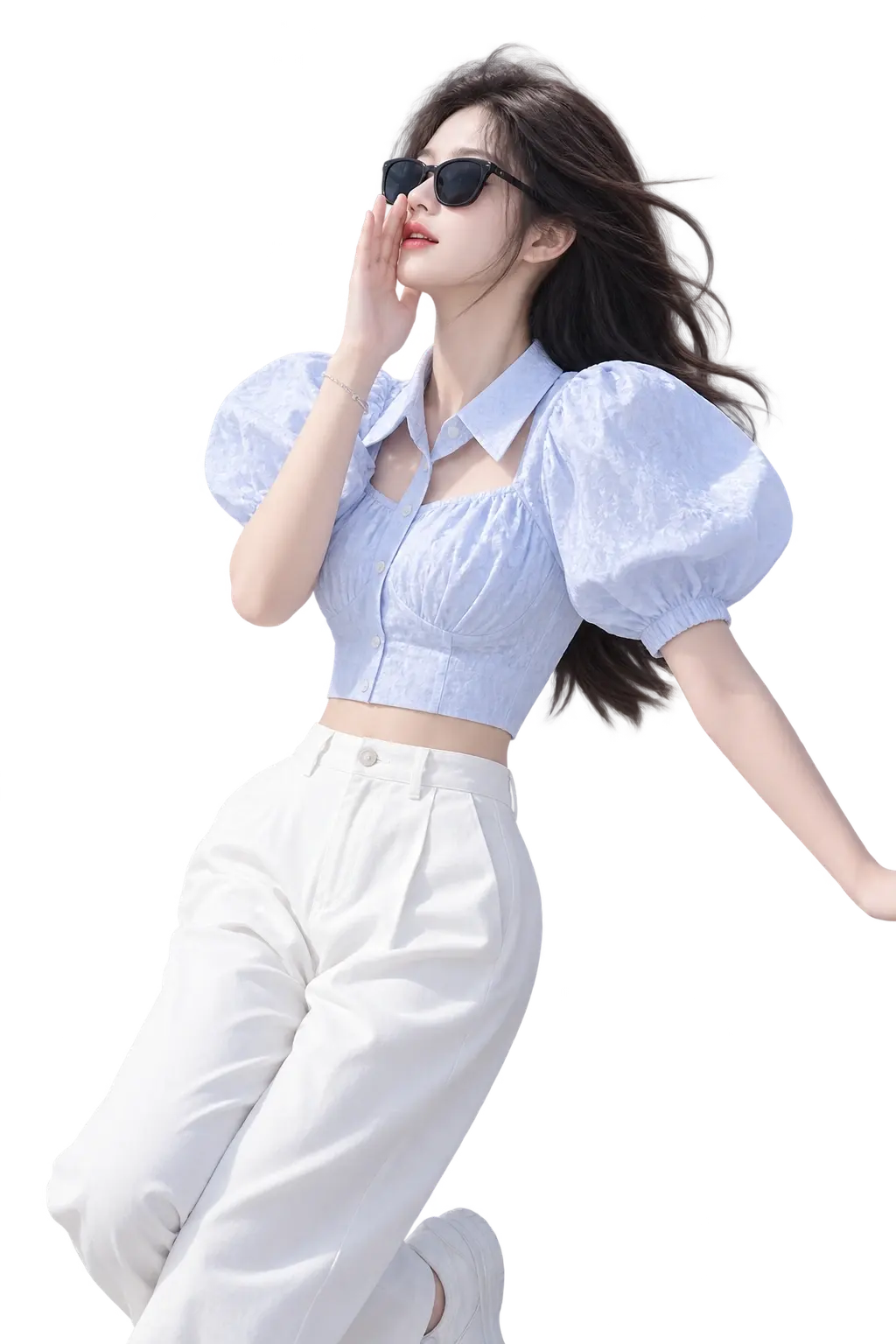




Showing 5 reference poses. Get the Posella app to see every pose in this setting and line up on them as you shoot.
Get it on Google PlayOn a boat the deck is never quite level and you are moving with the swell. The result is that almost every frame taken aboard has a tilted horizon, and the eye is very sensitive to it — two degrees off is enough to make the whole photograph feel wrong.
Turn on the camera grid and line up against the horizon rather than the rail, because the rail is tilting with you. Straightening afterwards is easy, but every rotation crops the edges, so leave a little extra room in the frame when you shoot.
A boat is a confined setting and you cannot step back ten paces for a wide view. That limitation is what produces the angles particular to it: shooting from the bow back along the deck, along the length of the hull to use the long lines, or down from an upper level if there is one.
The lines of the boat are this setting’s greatest asset. Rails, ropes, canopy struts and masts are strong leading lines, and placing a person at the end of one gives a far stronger composition than standing in the middle of the deck.
Water bounces light upward, and this is a rare advantage: it fills the shadows under the chin and eyes that on land require a reflector to lift. Portraits taken over water on an overcast day are often surprisingly evenly lit.
The cost is that under midday sun that same reflection adds to direct light and produces glare severe enough to keep the subject squinting. The best hours on water are the same as at the coast: early morning or late afternoon, when the surface starts returning the warm colour of the sky.
Turn on your camera and line yourself up with a reference pose. The web version is preview only — shooting and saving live in the app.
Drag to move the pose, pinch (or scroll) to resize.
Pose to try
Taking and saving photos is app-only.
