 PosellaPosella
A camera is a good prop because it gives your hands a clear job and implies a story immediately. This set covers raising it to your eye, holding it at waist level and wearing the strap across one shoulder, with angles that keep the lens off your face.
A camera is a good prop because it gives your hands a clear job and implies a story at once. But raised to your eye it hides the actual subject of the photograph. The balance is to hold it at chest or chin height rather than at your eye, so your face stays visible.
If you want the look of actually shooting, turn at an angle so one side of your face still shows rather than facing forward. Or catch the moment just after lowering the camera and looking up — you get the prop and the expression together.
Watch the strap. It is a small detail that regularly cuts awkwardly across the frame or twists into a tangle. Smooth it along one side of your neck, or wrap it around your wrist. A vintage film body usually photographs better than a modern digital one, simply because its shape is cleaner and less busy.
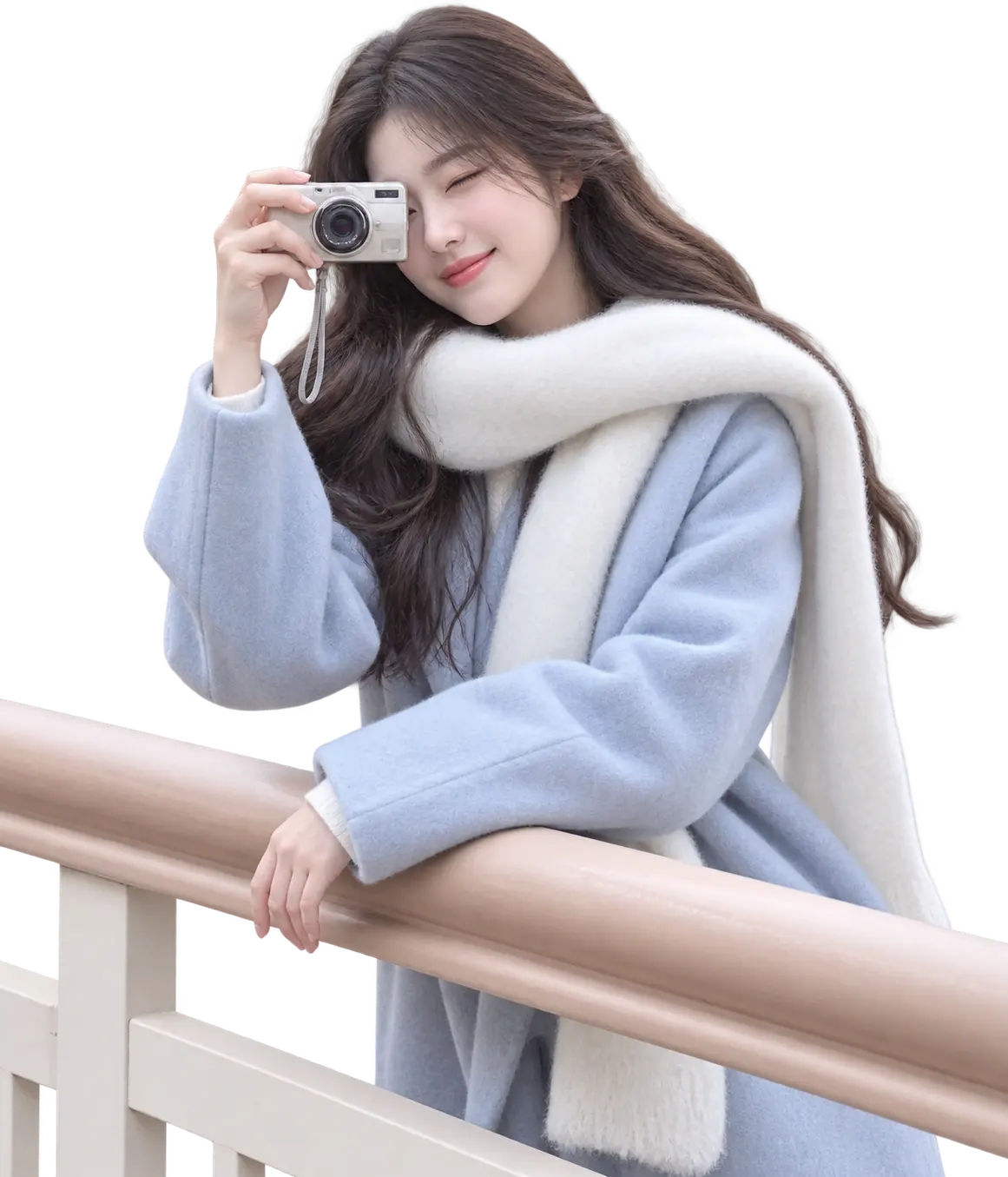
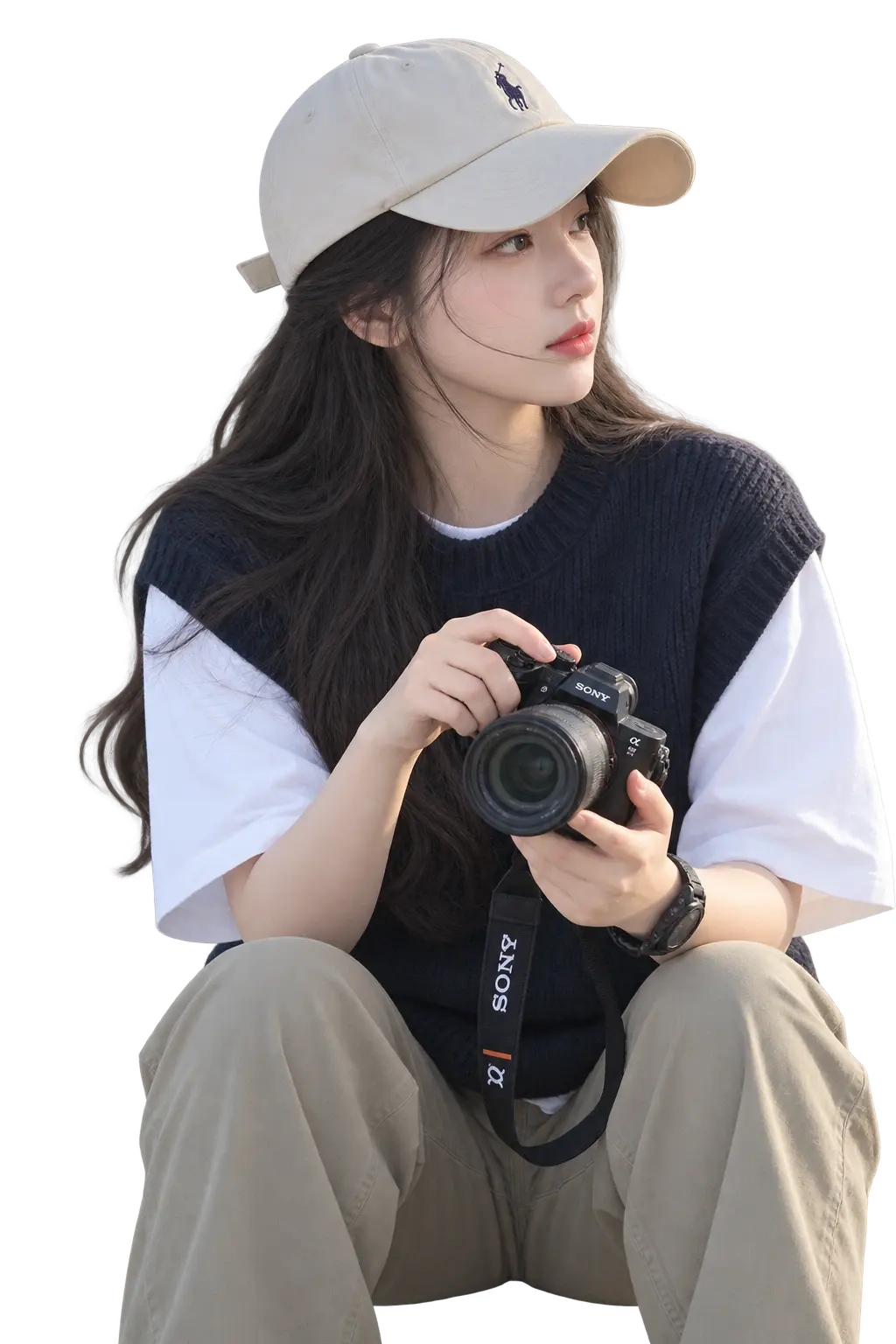
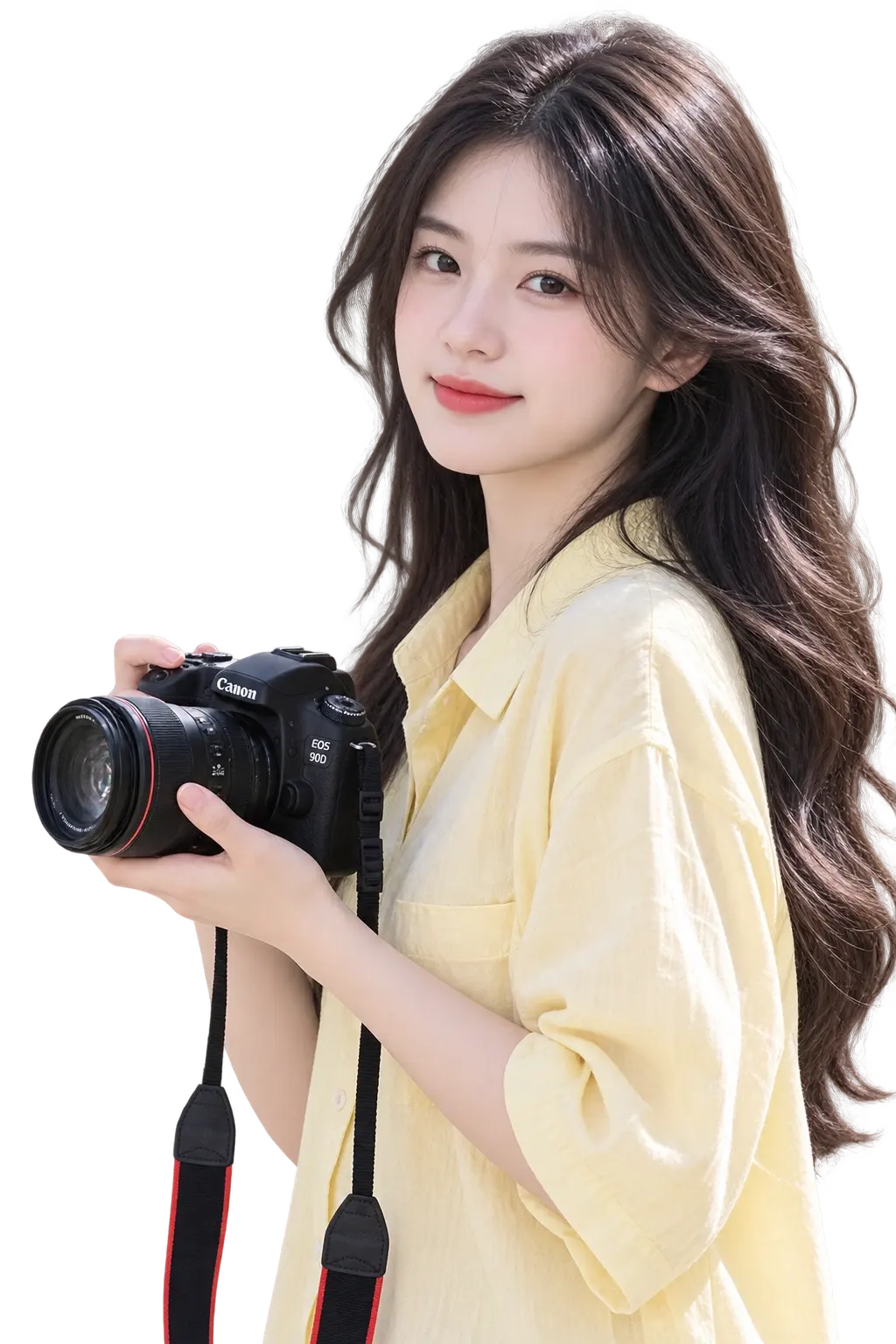
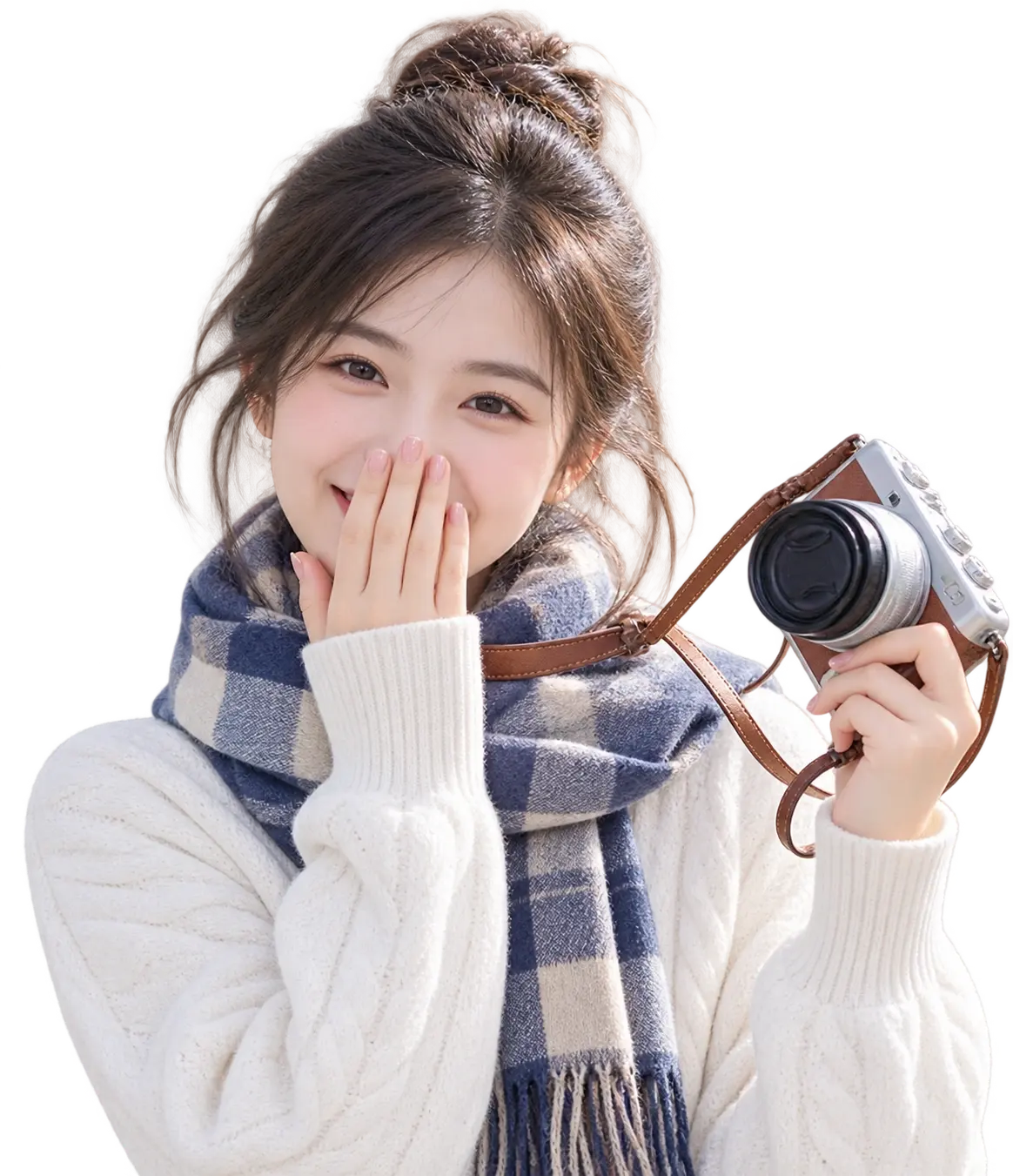
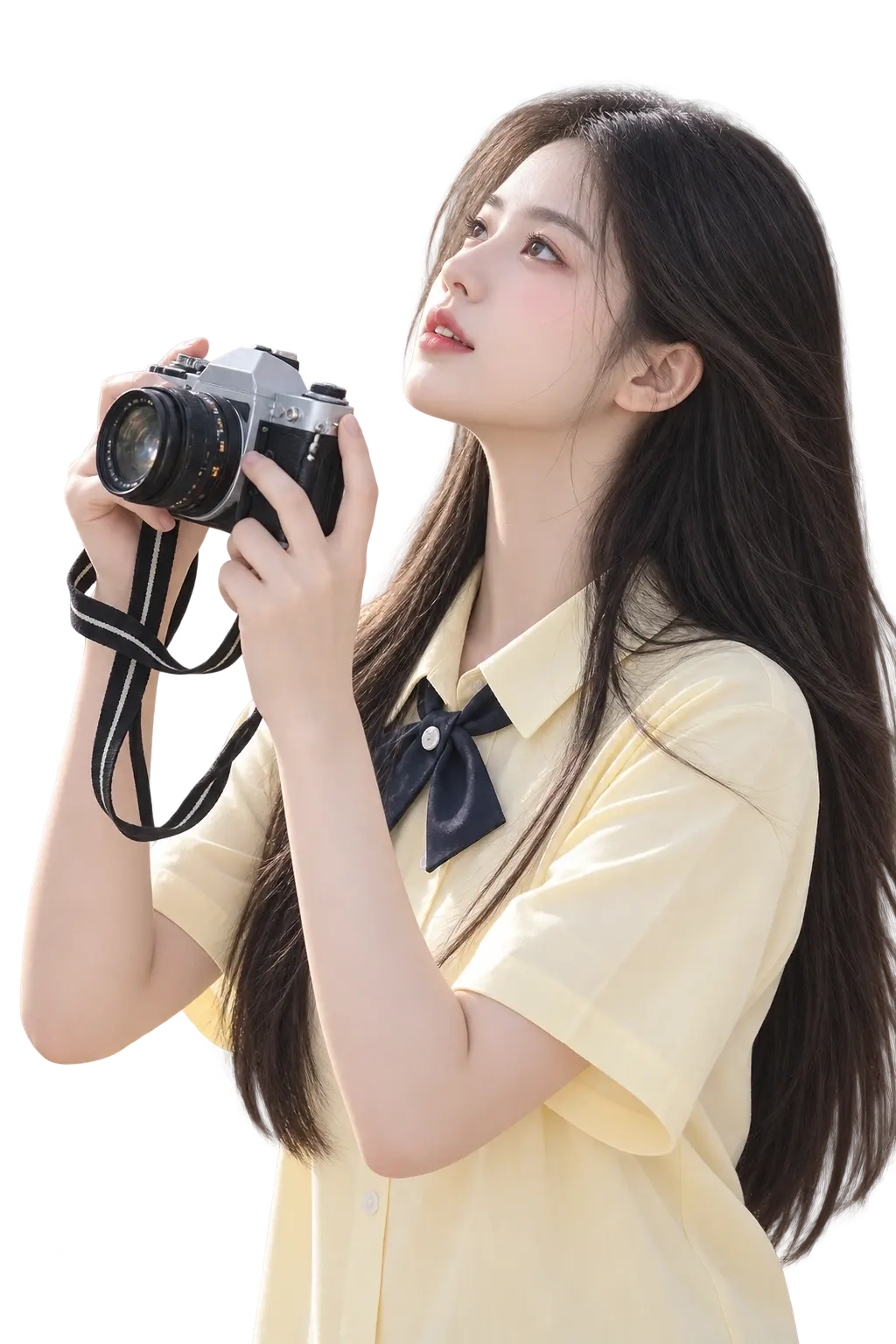
Showing 5 reference poses. Get the Posella app to see every pose in this setting and line up on them as you shoot.
Get it on Google PlayRaising a camera to the eye as though shooting is the intuitive pose and also the one that covers half your face. In the photograph the body and lens occupy the most important area of the frame, leaving a forehead and a chin — not enough to recognise anyone.
There are two answers. Lower the camera to chest height and look down at it, as if reviewing the last frame: the face stays fully visible and the posture reads far more naturally. Or hold it at eye level but turn your head to look out of frame, so the lens sits beside your face rather than over it.
People who actually use cameras hold the grip in the right hand with the left hand underneath the lens and the elbows tucked in. People who do not tend to hold both edges of the body with elbows out. The difference is very visible in a photograph and is usually the first detail that makes an image look staged.
If you are using a camera as a prop, simply moving the left hand under the lens makes the whole posture convincing. The right index finger should rest lightly on the shutter button rather than the whole hand wrapping the body.
The strap is an overlooked but genuinely useful element: it draws a diagonal across the torso, breaks up the rectangle of the upper body, and gives a hand something to touch. Slung over a shoulder or looped loosely around a wrist both work better than leaving it hanging.
This setting also suits close-ups: a hand turning the focus ring, an eye at the viewfinder, the front element reflecting the scene. Those frames usually draw more attention than a full-length shot, because they show an action rather than a person holding equipment.
Turn on your camera and line yourself up with a reference pose. The web version is preview only — shooting and saving live in the app.
Drag to move the pose, pinch (or scroll) to resize.
Pose to try
Taking and saving photos is app-only.
