 PosellaPosella
The hardest part of a couple shoot is that neither person knows where their hands go or how close to stand. This set answers exactly that: every pose specifies who stands in front, where each hand rests and where each person looks.
Couple photos fail for two reasons, almost every time: the two people stand too far apart, and neither knows what to do with their hands. Distance is the bigger problem — a gap between two people looks far wider in a photograph than it feels in the moment. The simple rule is to stand slightly closer than feels natural, usually touching at the shoulder or hip.
Then decide who is in front. Do not stand side by side square to the camera; that composition is flat and reads like a double passport photo. Have one person step half a pace back and turn slightly toward the other. It creates depth and gives you two angled shoulder lines, which is always easier to look at than two parallel ones.
Let your hands make contact rather than hover. A hand at the waist, fingers linked, one person straightening the other's collar — any of these beats two people standing next to each other with their arms down. And you do not both need to look at the camera: one looking at the lens while the other looks at their partner usually carries far more feeling.
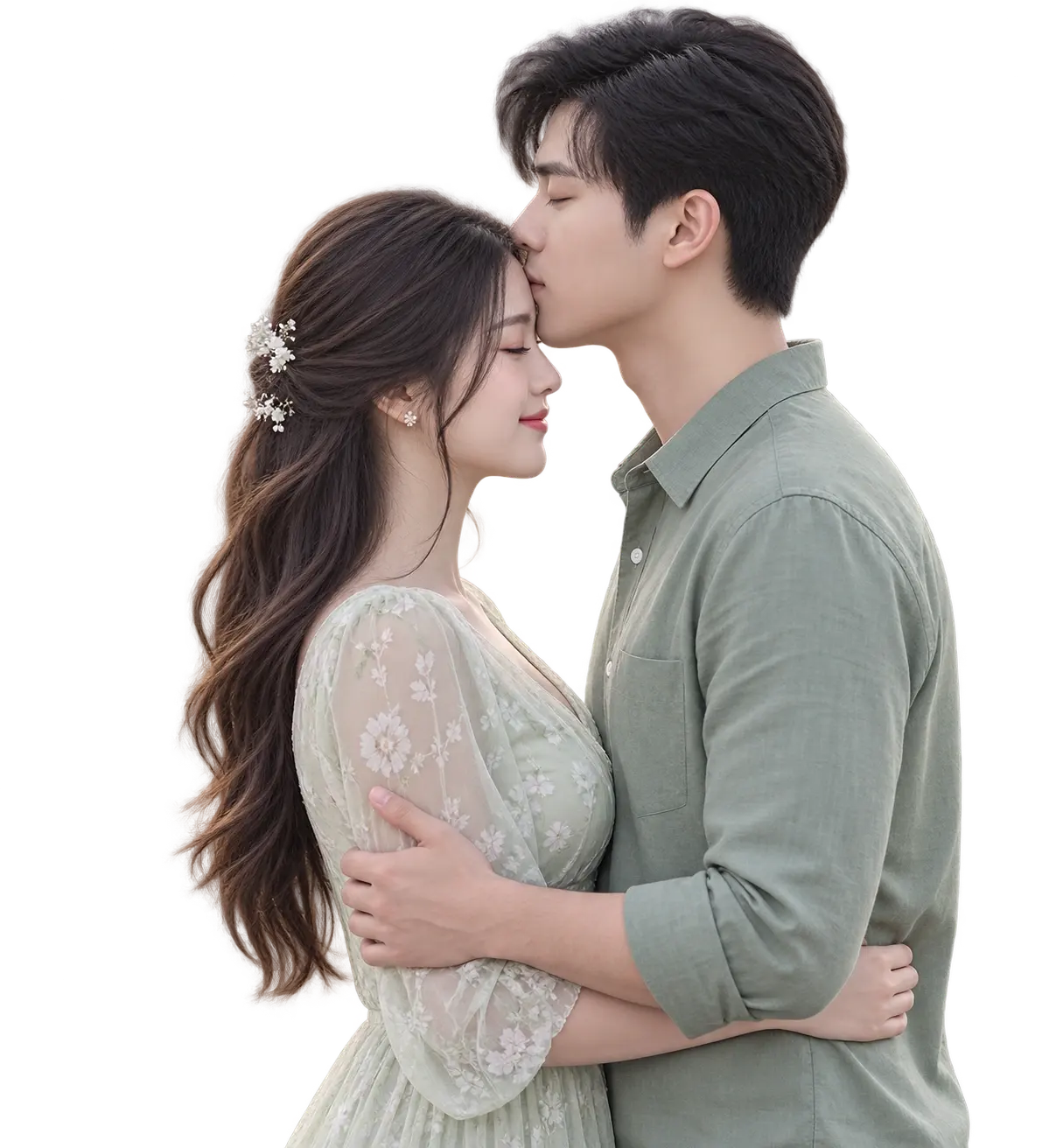
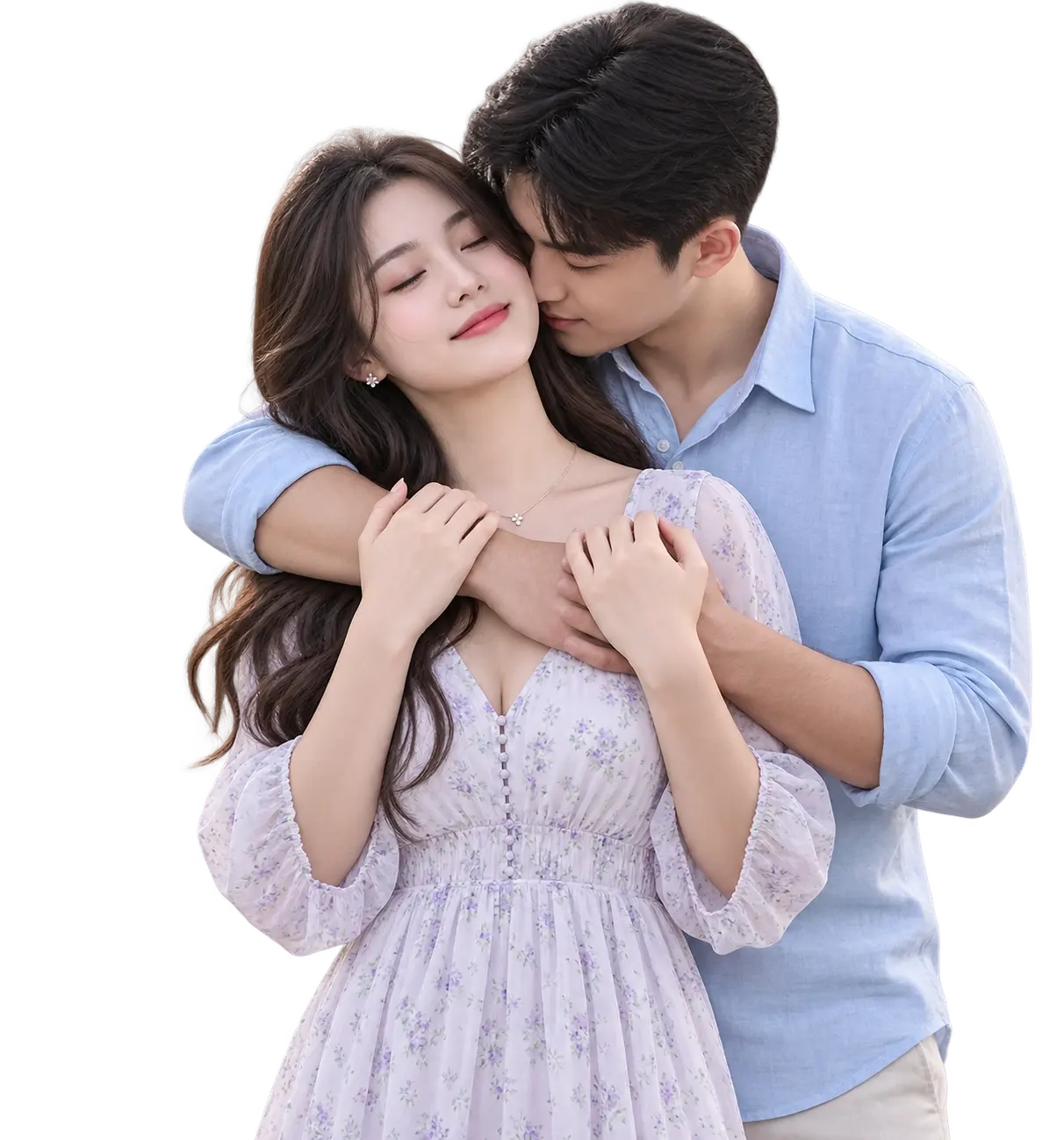
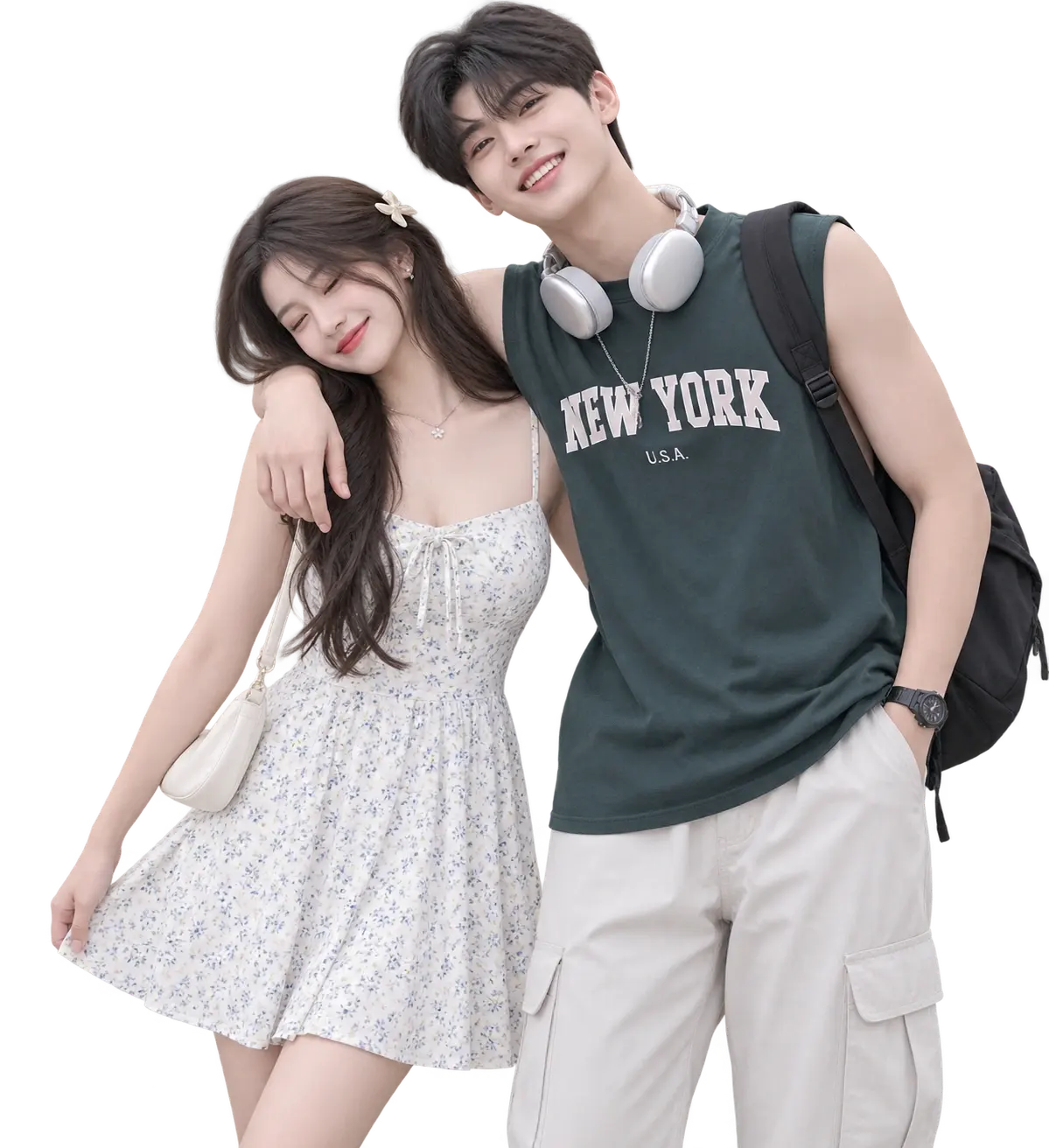

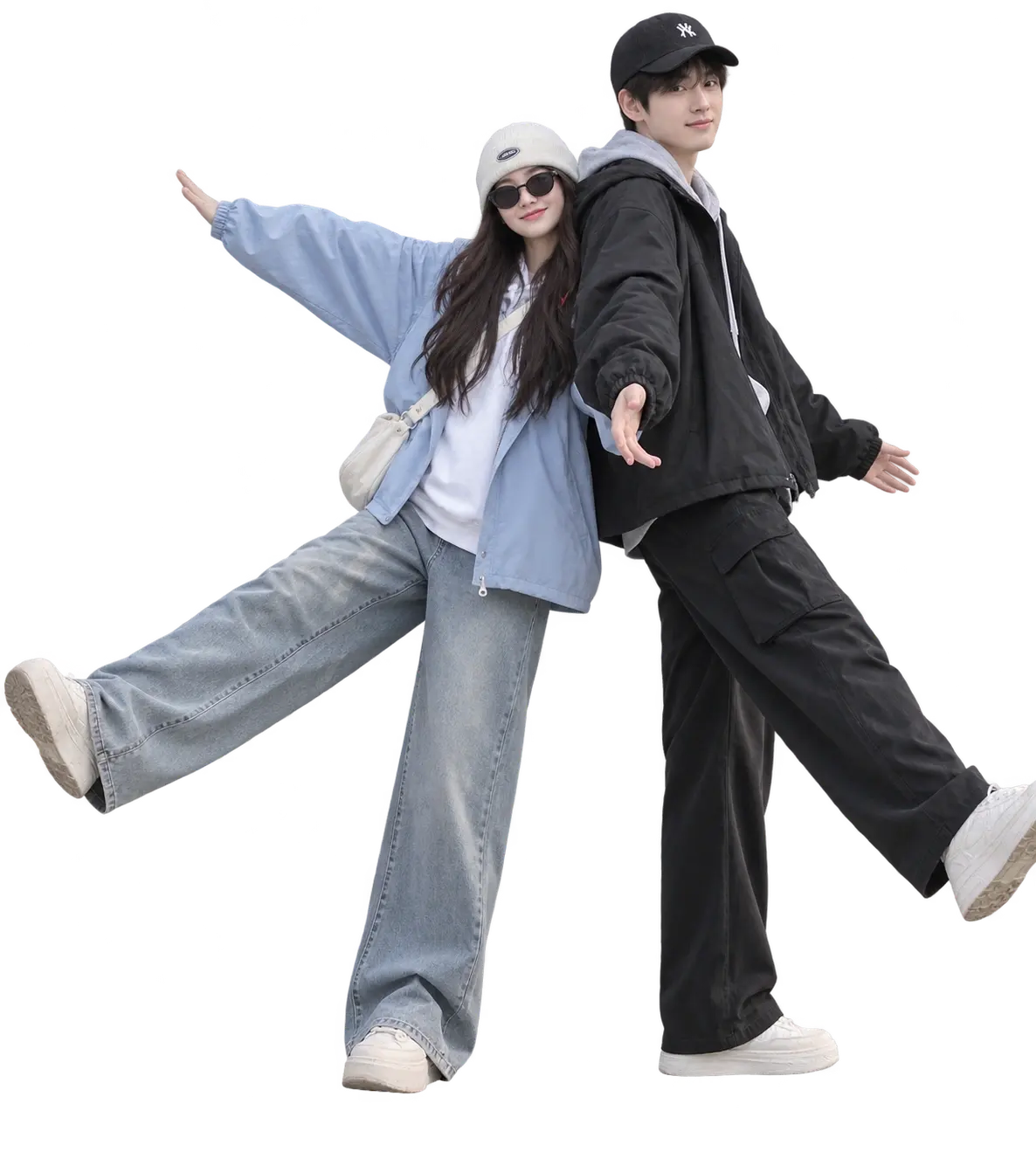
Showing 5 reference poses. Get the Posella app to see every pose in this setting and line up on them as you shoot.
Get it on Google PlayA camera compresses three dimensions onto a flat plane, and in the process every gap between two people is exaggerated. Standing a hand’s width apart feels close while you are doing it, but in the photograph that gap reads as distance. It is the most common fault in couple photographs and almost nobody notices it at the time.
The practical rule: stand closer than feels comfortable, then make at least one point of contact — shoulder against shoulder, a hand on a back, fingers laced together. Contact makes two people read as one shape in the frame rather than two separate subjects who happen to be in the same picture.
A clear height difference puts two faces at very different levels, unbalancing the frame and forcing the photographer to shoot wider to fit both in. Standing upright side by side is the arrangement that shows the difference most.
There are three easy answers. The taller person steps half a pace back and to the side, so the changed distance to the lens narrows the gap on its own. Or both of you sit — steps, a bench, grass — because seated, height difference nearly disappears. Or the shorter person stands one step higher; a single stair is enough.
Two people standing straight, both smiling, both facing the camera is the safest arrangement and the dullest. It says nothing about the relationship between them, and it puts both into a stiff performing posture at the same moment.
Swap it for something with interaction: one person says something and the other reacts; walk together and glance across; one arm around from behind. The best frame in this kind of set is almost always the one immediately after a real laugh, not the most carefully arranged one. Shoot continuously and choose afterwards.
Turn on your camera and line yourself up with a reference pose. The web version is preview only — shooting and saving live in the app.
Drag to move the pose, pinch (or scroll) to resize.
Pose to try
Taking and saving photos is app-only.
