 PosellaPosella
The usual mistake with flowers is holding them too high, so they cover the face. This set positions the bouquet at the waist, the chest or beside the cheek depending on its size, and specifies the turn so the blooms do not blend into the background.
Flowers are a good prop because they give your hands a job and add colour, but they are also the easiest prop to misuse. The usual mistake is holding the bouquet too high, at chest or face level, where it covers your neck and chin — the two things that define a face in a photograph.
The safest position is at the waist or a little below, offset to one side rather than centred on your body. If you want the flowers near your face, bring them beside the cheek and keep enough distance that the jawline stays visible. A single stem is far more forgiving: hold it at chest height with the bloom angled toward the camera.
Watch the colour relationship with the background. White flowers against a bright background, or pale pink against a pink wall, simply disappear. Pick blooms that contrast with what is behind them, or change the background. Outdoors, keep harsh direct sun off the bouquet — pale petals blow out to featureless white very quickly.
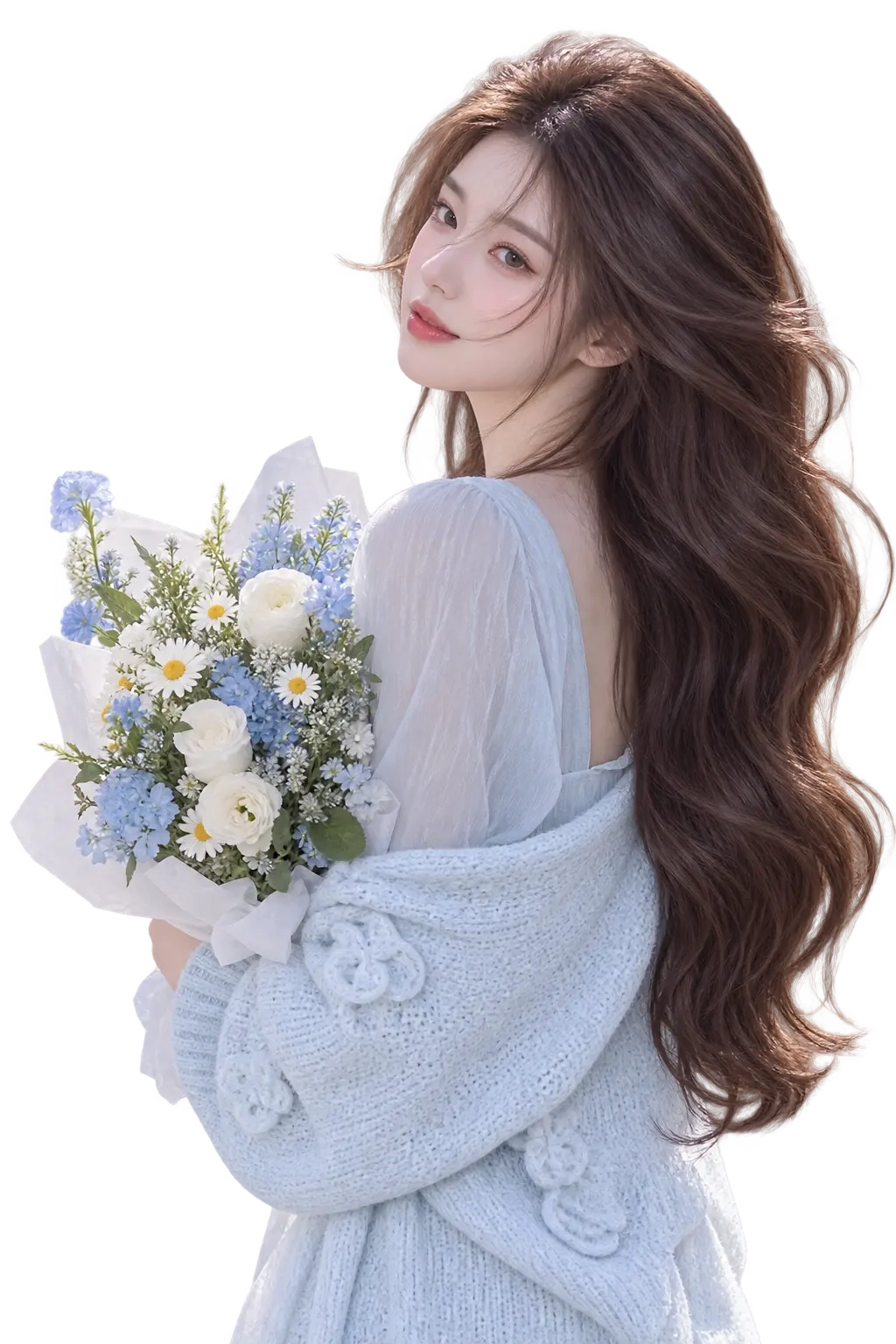
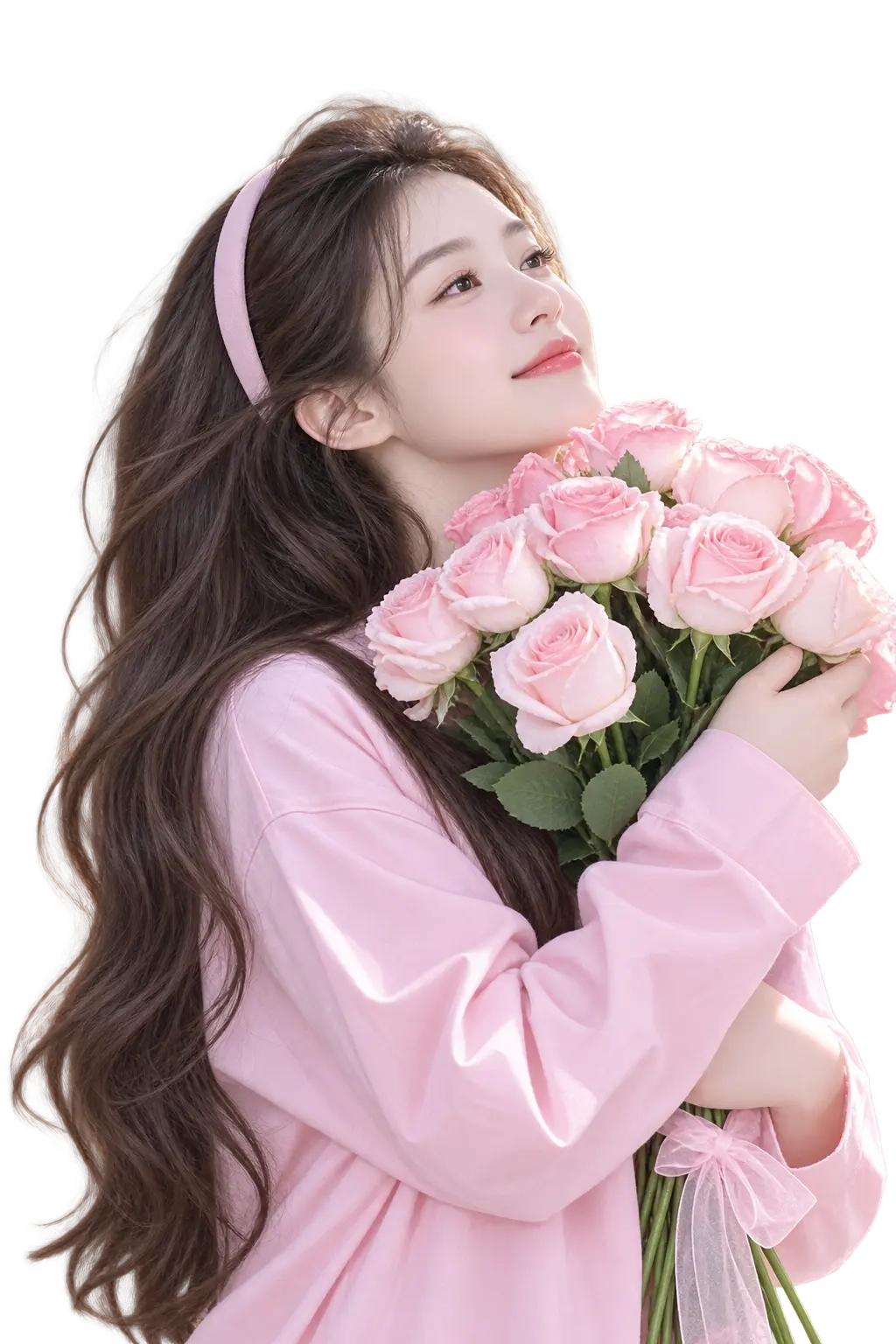
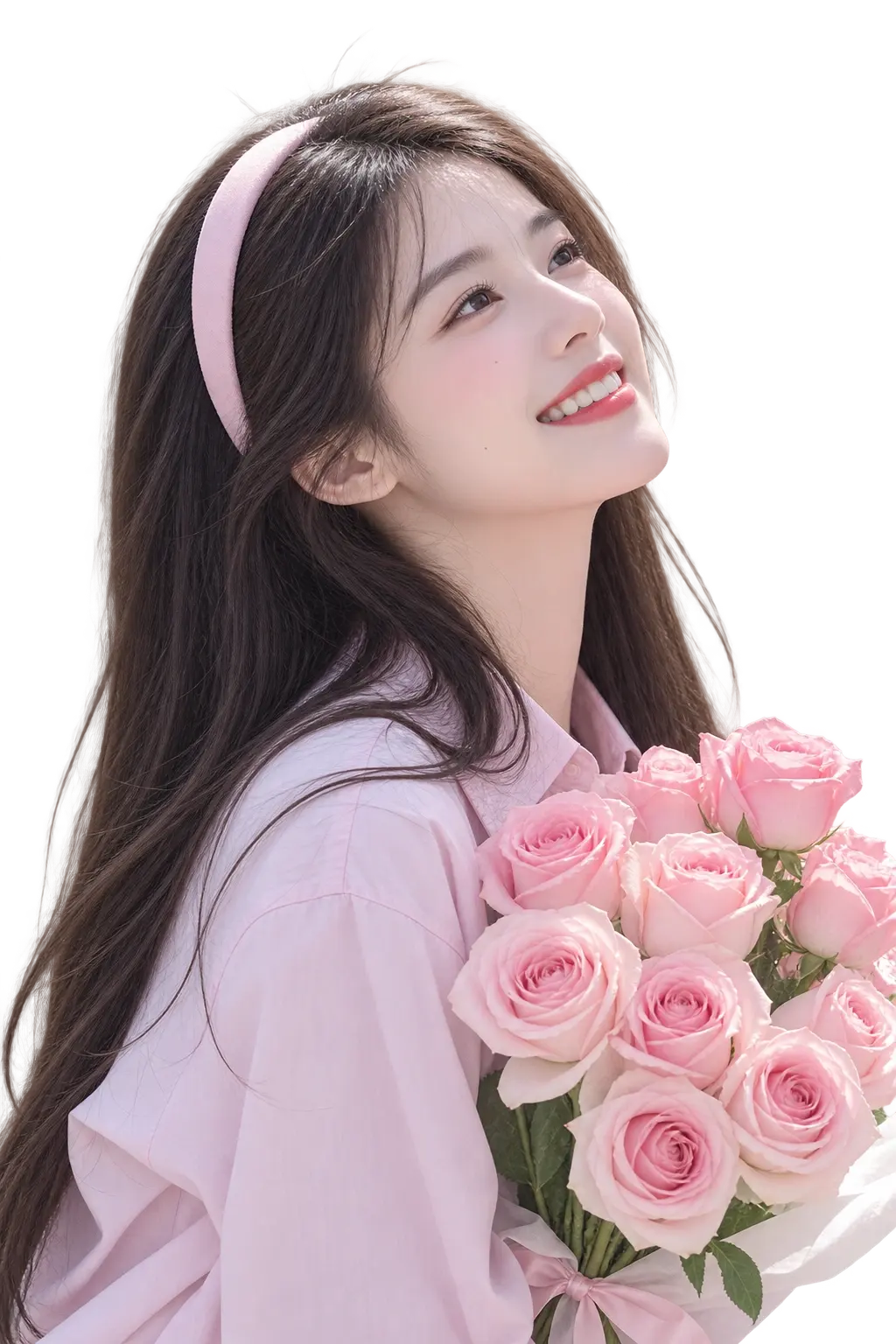
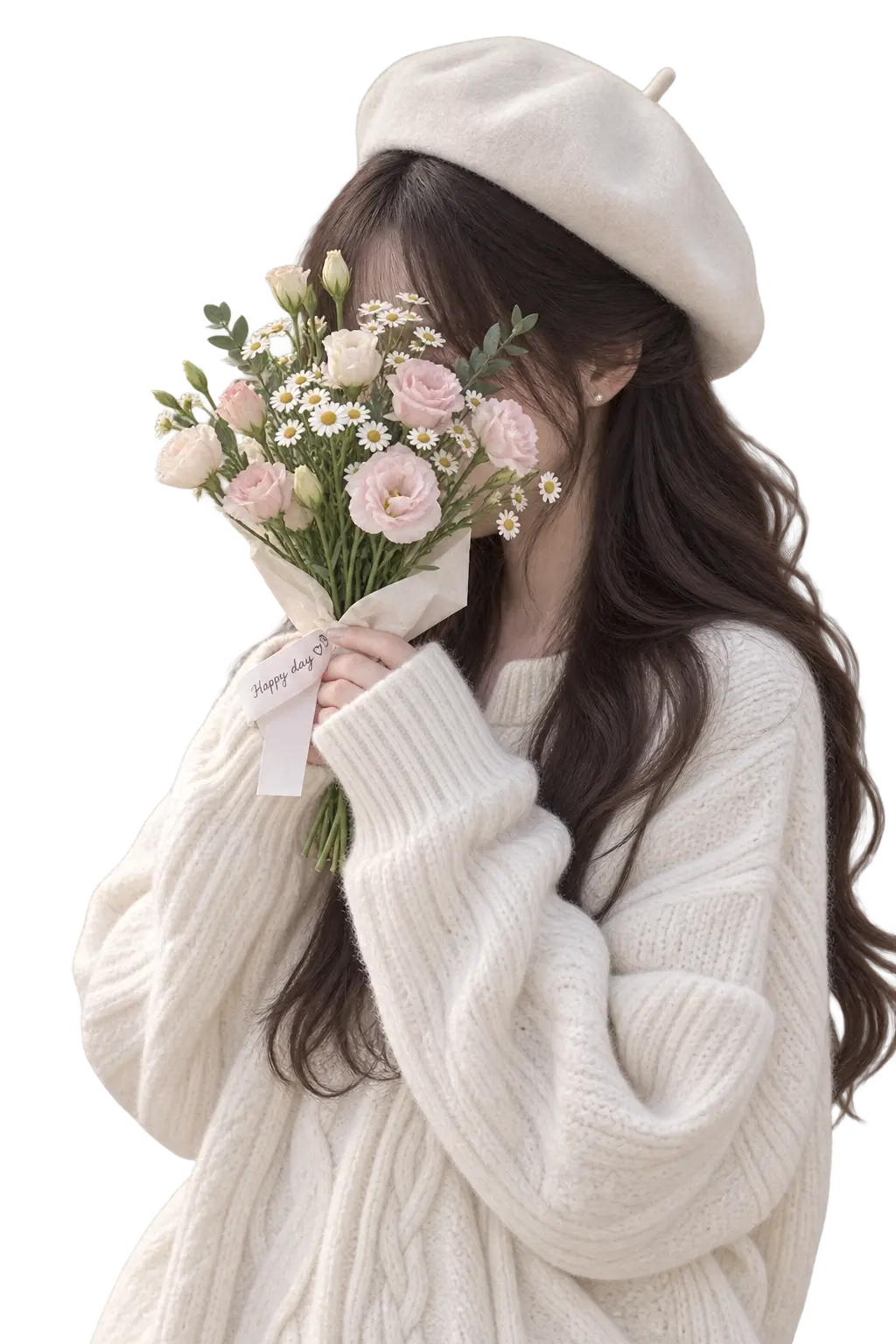
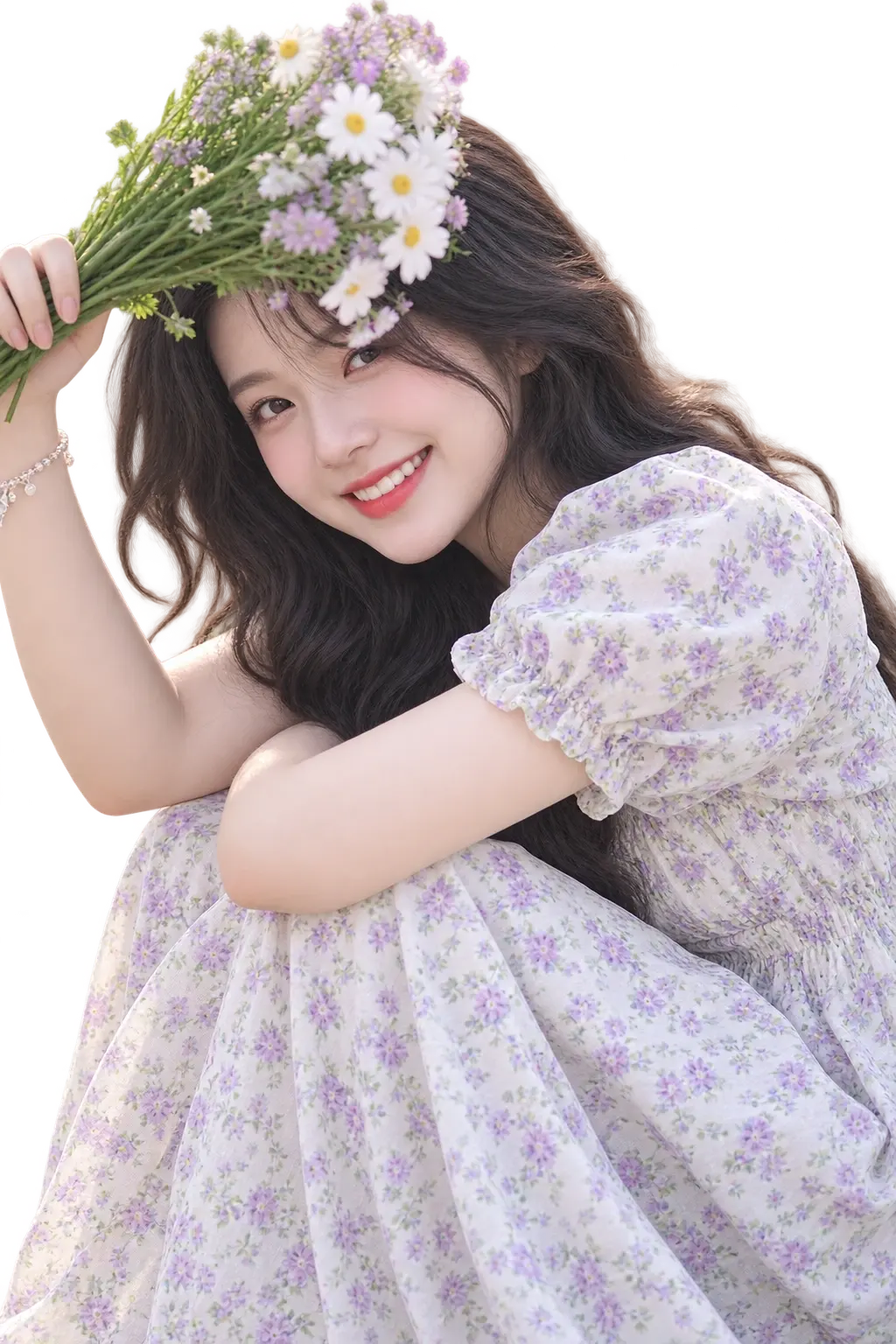
Showing 5 reference poses. Get the Posella app to see every pose in this setting and line up on them as you shoot.
Get it on Google PlayA bed of mixed flowers looks glorious to the eye, but in a photograph it becomes thousands of high-contrast colour points spread across the frame. The viewer’s eye has nowhere to settle, and the face — which should be the subject — has to compete with the entire background. This is why flower-garden photos are so often called cluttered despite a lovely location.
The most effective fix is to blur the background: stand further from the bed, step the camera back and zoom in, or use portrait mode. Once the flowers behind resolve into soft patches of colour instead of individual blooms, the face immediately separates. Choosing a section of relatively uniform colour also beats a spot containing every colour at once.
Shooting from adult eye level down onto a low bed gives you a photograph with soil as the background and flowers flattened underneath. It is the default angle and the weakest one, because it turns a garden into a carpet rather than a space.
Lower the camera to the height of the blooms, or below. From there flowers appear in both the foreground and the background, the subject sits inside the layer of flowers, and the sky becomes the backdrop. A few blooms directly in front of the lens, thrown completely out of focus, add a further layer of depth with no equipment at all.
A yellow outfit in a field of sunflowers is the classic way to make yourself disappear. When clothing matches the dominant colour of the background, the boundary between person and place softens and the photograph loses its focal point.
The safe approach is a neutral — white, cream, navy, black — or a colour opposite the flowers on the colour wheel. White works especially well in gardens because it separates from every flower colour without competing with any of them. If you want something vivid, make sure it is clearly different rather than nearly the same.
Turn on your camera and line yourself up with a reference pose. The web version is preview only — shooting and saving live in the app.
Drag to move the pose, pinch (or scroll) to resize.
Pose to try
Taking and saving photos is app-only.
