 PosellaPosella
Not every yoga posture photographs well — plenty of technically correct asanas read as a tangle from one side. This set picks the ones with clean lines in profile: warrior, tree, downward dog and extended reaches.
Not every yoga posture photographs well. Plenty of technically correct asanas read as a tangle of limbs from one angle. The selection rule is to favour postures with clean lines in profile — warrior, tree, downward dog, and long extended reaches.
Camera height matters more here than in most genres. Shooting level with the hips gives the most accurate body proportions; from above shortens the legs, from below unbalances the upper body. For floor postures, drop the camera near ground level to keep the lines intact.
Backlight is the best choice for yoga. Placing a low sun behind the practitioner at sunrise or sunset draws a rim of light along the body, emphasising exactly what a yoga posture is about: shape. Indoors, a large window behind achieves the same effect.
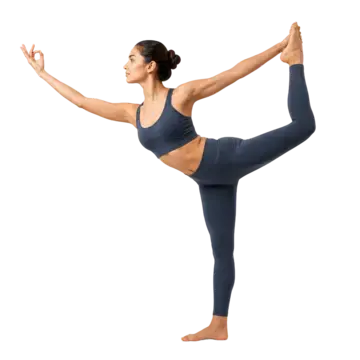
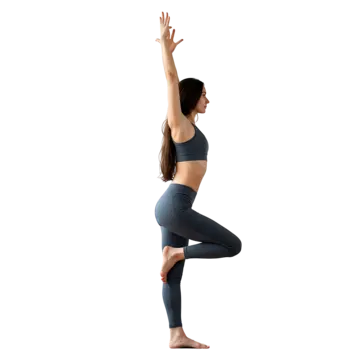
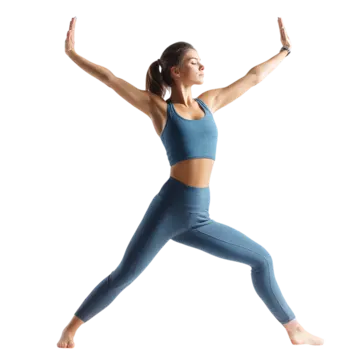
Showing 3 reference poses. Get the Posella app to see every pose in this setting and line up on them as you shoot.
Get it on Google PlayMost yoga postures are built on a vertical plane: the curve of the spine, the opening of the hips, the line of the back leg. Photographed head-on, all of that compresses and the pose reads flat and illegible.
A side view shows the shape of almost every standing and folding posture most clearly. For open poses such as warrior two, a forty-five degree angle usually beats both. The general rule: stand where the largest angles of the body are visible.
The fault that ruins most yoga photographs is not lighting but overlap: an arm crossing the torso, one leg hiding the other, a hand disappearing into hair. The camera flattens three dimensions into two, so limbs at different depths still merge into one confusing mass.
Before the shutter, look at the screen and check that there is visible space between the limbs. Half a step sideways by the photographer is usually enough to separate them. It is also why good yoga photographs tend to be taken from the angle where the limbs form clear triangles.
The mat occupies a wide band across the lower frame and often carries a strong colour. Purple, orange or patterned mats drag the eye downward, the opposite direction from where you want it. A muted, grey or black mat makes a much better base.
The same goes for what is behind: a plain wall, open sky or water all beat a studio full of mirrors, equipment and other people. If you are in a mirrored room, check whether the photographer appears in the reflection — it is the most frequently missed detail of all.
Turn on your camera and line yourself up with a reference pose. The web version is preview only — shooting and saving live in the app.
Drag to move the pose, pinch (or scroll) to resize.
Pose to try
Taking and saving photos is app-only.
